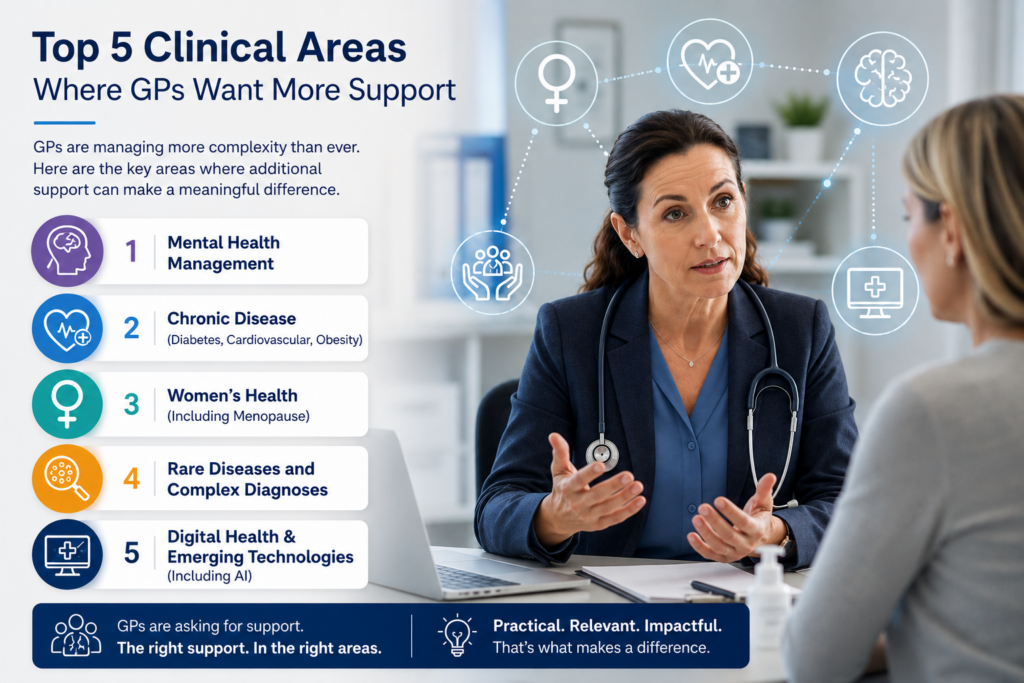
GPs are managing more complexity than ever before, from rising patient expectations to evolving treatment pathways and time pressures within the consult.
While GPs remain the cornerstone of patient care, there are clear areas where additional support from the broader healthcare ecosystem, including pharma, can make a meaningful difference.
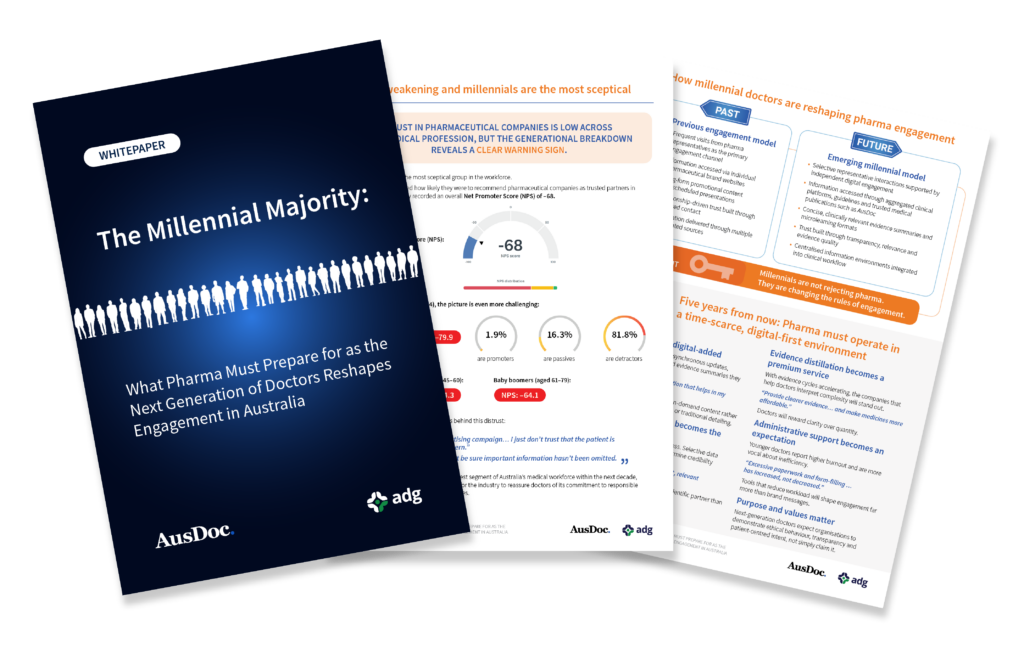
Australian medicine is entering a generational transition, with millennials set to become the largest cohort as baby boomer and Generation X doctors retire over the next decade.
This is a challenge because trust in pharma companies is particularly low among younger clinicians.
This whitepaper draws on recent research to help pharma marketers, sales and medical teams’ future proof their engagement with the next generation of clinicians over the next five to ten years.
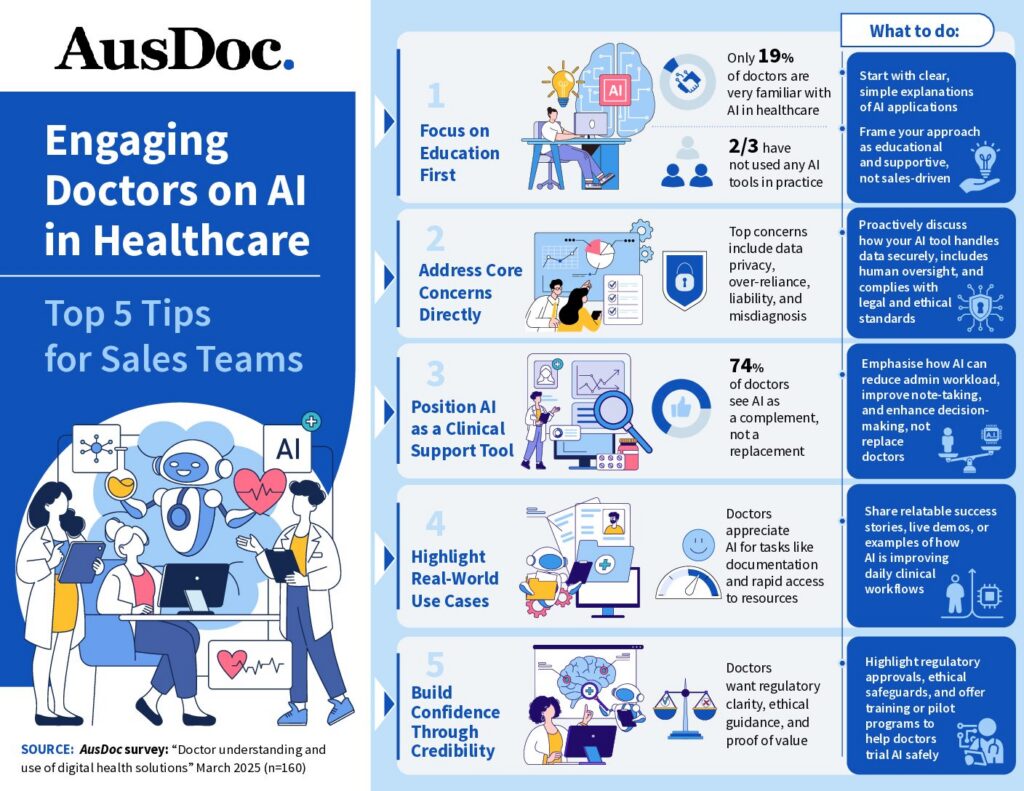
Most doctors are still unfamiliar with AI in healthcare, so clear, simple explanations matter. Position AI as a support tool that eases admin and improves workflows, rather than replacing clinicians. Real-world examples, strong regulatory and ethical safeguards, and low-risk trial opportunities can all help build trust.
Download the Infographic
Jean Hailes for Women’s Health partnered with AusDoc to drive awareness and enrolments for its menopause CPD modules, using targeted content, eDMs and digital placements to reach time-poor GPs.
The campaign demonstrates how precise targeting, relevant clinical content and a coordinated multi-channel approach can deliver strong engagement and measurable lead generation.
An AI “supervisor” developed at the RACGP 2026 Hackathon highlights a new model for continuous GP development, delivering post-consultation feedback based on clinical notes. By prompting reflection, identifying blind spots, and suggesting targeted learning, it addresses the long-standing gap in supervision once doctors enter independent practice.
For health tech, this signals a scalable opportunity in workflow-integrated education and decision support, particularly for platforms that embed into clinical systems and demonstrate measurable impact.
For pharma, it points to a shift toward personalised, case-based engagement, where evidence and education are delivered in real clinical context rather than through traditional CPD channels.
Doctor burnout is reshaping Australian medical practice, with rising administrative burden and time pressure affecting how doctors engage with industry. Traditional approaches that add complexity or consume time are increasingly misaligned with doctors’ needs.
Clinicians are seeking concise evidence, practical tools, and support that reduces administrative load. Engagement that saves time and improves patient care is now far more valued than additional touchpoints.
This article argues that pharma and health tech companies must redesign engagement to prioritise efficiency, clarity and practical clinical support if they want to remain relevant and trusted partners.
AusDoc and AAPM are proud to announce a strategic partnership to strengthen the voice, visibility and professional recognition of Practice Management professionals across Australia.
The Australian general practice landscape is changing and so should pharma’s playbook. For years, pharmaceutical companies have focused their energy on reaching doctors. But the real gatekeepers of access, time, and influence increasingly sit just outside the consulting rooms: Practice Managers.
They may not prescribe drugs, but they decide who gets in the door, when, and on what terms. In a system under pressure, that power is only growing.
AusDoc is expanding beyond its core doctor audience to include primary care nurses through a strategic partnership with the Australian Primary Health Nurse Association (APNA).
ADHD is no longer peripheral to Australian general practice. Rising patient demand, prolonged specialist wait times, and growing public awareness mean GPs are now central to ongoing ADHD care.
For pharmaceutical companies, this creates a clear opportunity, but also exposes the limits of traditional engagement models.
A national hearing healthcare provider partnered with AusDoc to strengthen GP referral preference for their brand, resulting in a 98% uplift in first-choice GP referral rates
Doctors were clear that pharma delivers substantial scientific progress but equally clear that trust hasn’t kept pace. Addressing this gap between high innovation and low trust is exactly where the opportunity lies to reset the doctor–pharma relationship.