ADHD care in Australia is shifting to GPs faster than the system can support. An AusDoc survey of 213 GPs reveals where the pressure is landing, why existing guidance isn’t reaching practice, and what GPs say it will take to fix it.
Read more


ADHD care in Australia is shifting to GPs faster than the system can support. An AusDoc survey of 213 GPs reveals where the pressure is landing, why existing guidance isn’t reaching practice, and what GPs say it will take to fix it.
Read more
New AusDoc research shows Australian GPs aren’t waiting for AI to earn their trust before they use it. For AI vendors targeting the profession, that’s not a barrier to plan around, it’s an opening.
Read more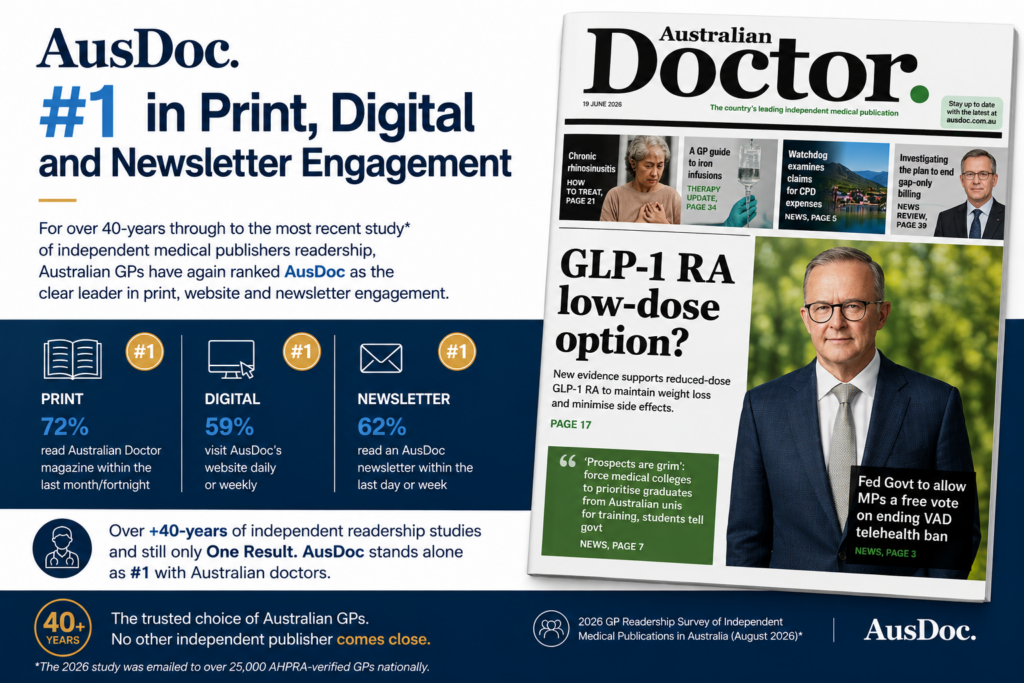
The 2026 GP Readership Survey found AusDoc remained the leading independent medical publisher among Australian GPs across print, website and email newsletter engagement.
Among respondents, 72% had read Australian Doctor within the relevant print cycle, while 59% engaged with the AusDoc website and 62% with AusDoc newsletters within the previous day or week, ahead of all surveyed competitors.
Read more
Last year, over 1,000 Australian doctors gave us The Uncomfortable Truth about how they really see pharma. This year we went further — 1,417 doctors, plus 80+ pharma fieldbased employees, for the full picture from both sides of the fence.
Register your interest for a private debrief of the AusDoc BIG Doctor Survey 2026, before the findings go public and explore what they mean for your HCP strategy.
Read more
Australian GPs are increasingly entering consultations that have already started without them. Patients arrive with self-researched diagnoses, treatment preferences, and safety concerns sourced from Google, AI tools, and social media.
Read how for pharma this shift redefines the engagement opportunity.
Read more
The Australian pharmaceutical sector has a reasonably healthy relationship with its communications agencies.
A new survey of pharma and biotech professionals shows 85% rate the agencies they work with as Good or better.
That’s a solid foundation and when you ask the best relationships to describe what great looks like, the answer is clear: “Real partners, they understand both commercial and strategic challenges.”
The gap between that experience and the average one is the story worth telling.
Read more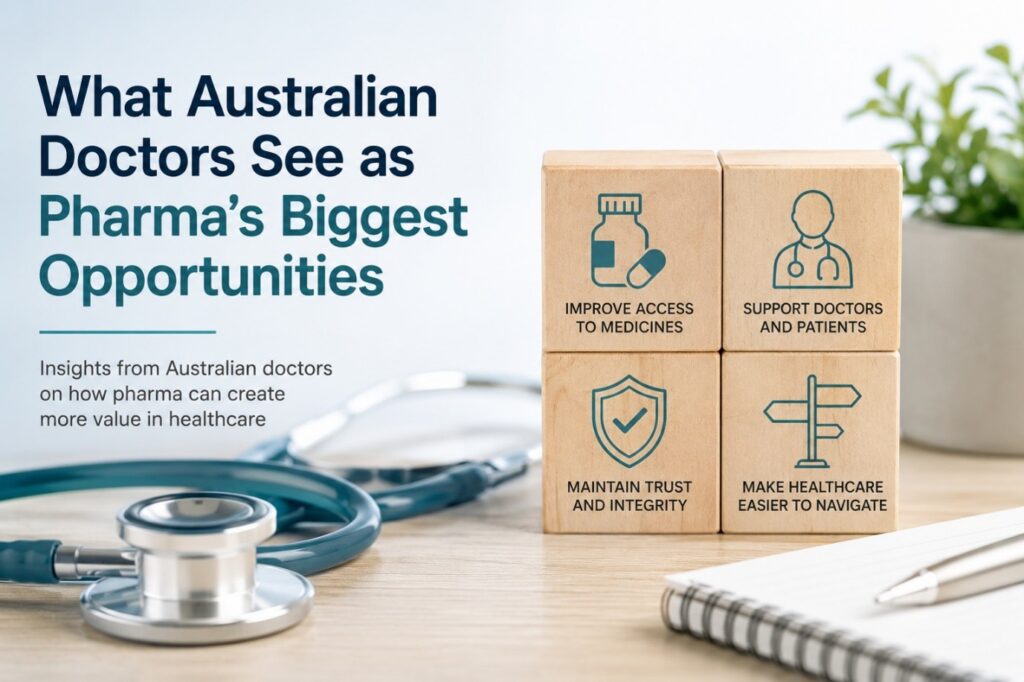
Australian doctors say the biggest opportunities for the pharmaceutical industry lie in four areas: improving access to medicines, providing practical clinical support, maintaining trust and transparency, and helping make healthcare easier to navigate.
These findings come from the AusDoc BIG Doctor Survey (Sept 2025, n=1,430).
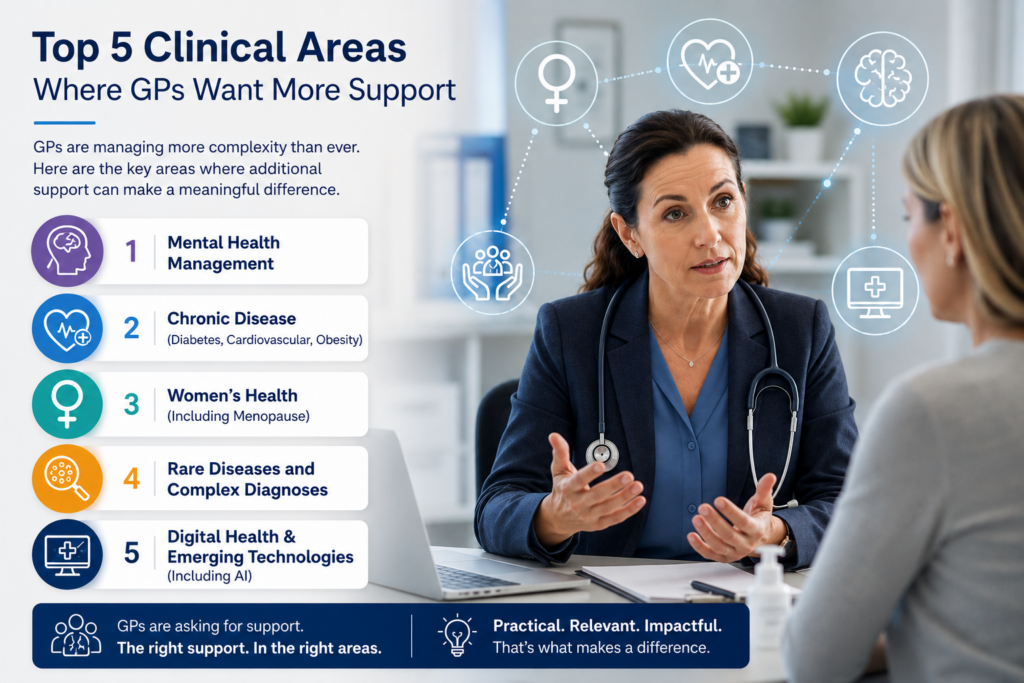
GPs are managing more complexity than ever before, from rising patient expectations to evolving treatment pathways and time pressures within the consult.
While GPs remain the cornerstone of patient care, there are clear areas where additional support from the broader healthcare ecosystem, including pharma, can make a meaningful difference.
Read more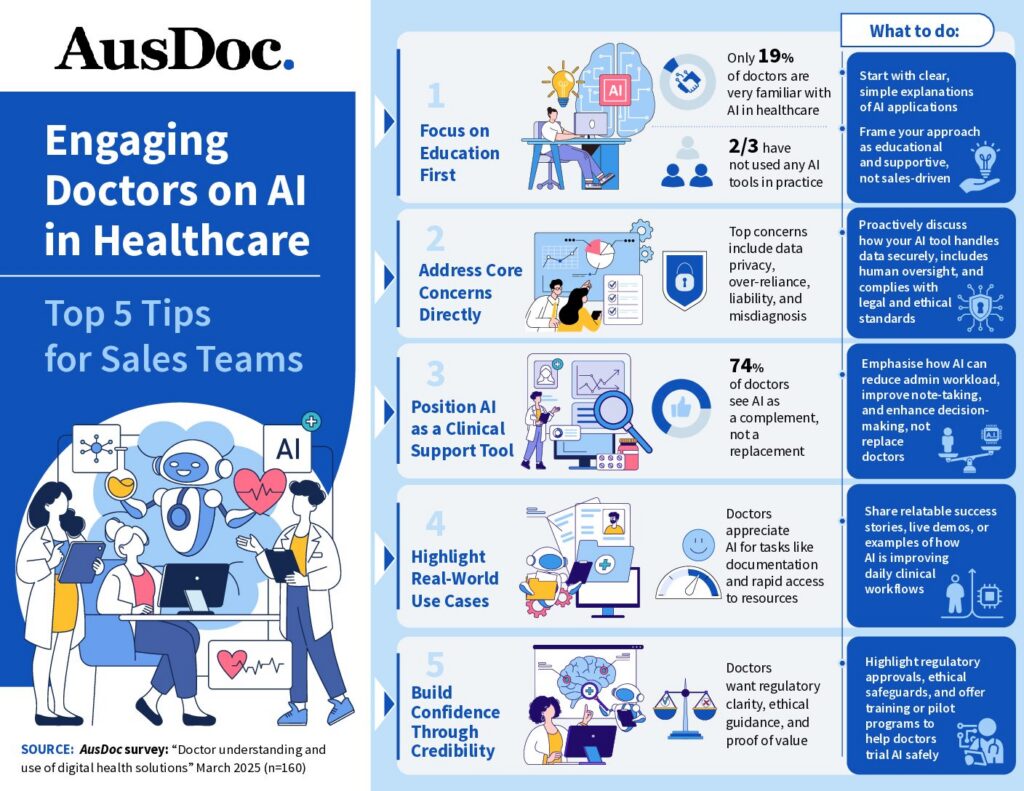
Most doctors are still unfamiliar with AI in healthcare, so clear, simple explanations matter. Position AI as a support tool that eases admin and improves workflows, rather than replacing clinicians. Real-world examples, strong regulatory and ethical safeguards, and low-risk trial opportunities can all help build trust.
Download the Infographic
Read more
An AI “supervisor” developed at the RACGP 2026 Hackathon highlights a new model for continuous GP development, delivering post-consultation feedback based on clinical notes. By prompting reflection, identifying blind spots, and suggesting targeted learning, it addresses the long-standing gap in supervision once doctors enter independent practice.
For health tech, this signals a scalable opportunity in workflow-integrated education and decision support, particularly for platforms that embed into clinical systems and demonstrate measurable impact.
For pharma, it points to a shift toward personalised, case-based engagement, where evidence and education are delivered in real clinical context rather than through traditional CPD channels.
Read more